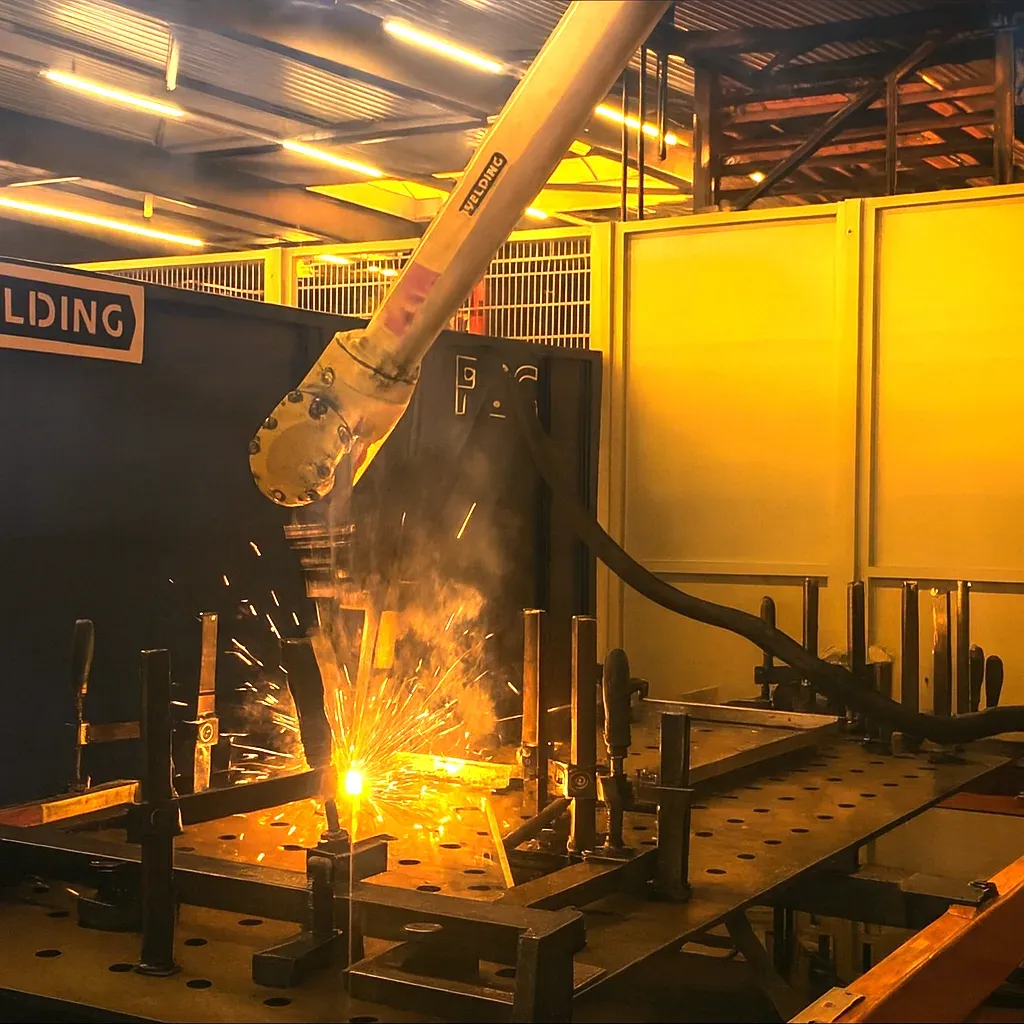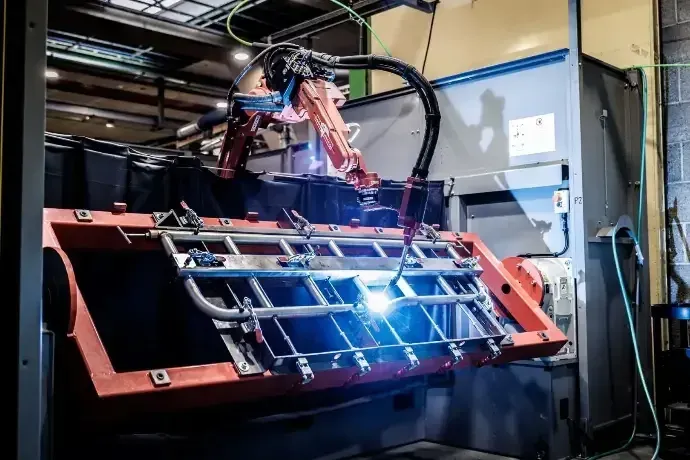
"We're a supplier. We have new products every day," says Ulrich Schulz, the welding specialist responsible for Hülsmann's robots. With ArcNC, the company has cut robot programming and setup time.
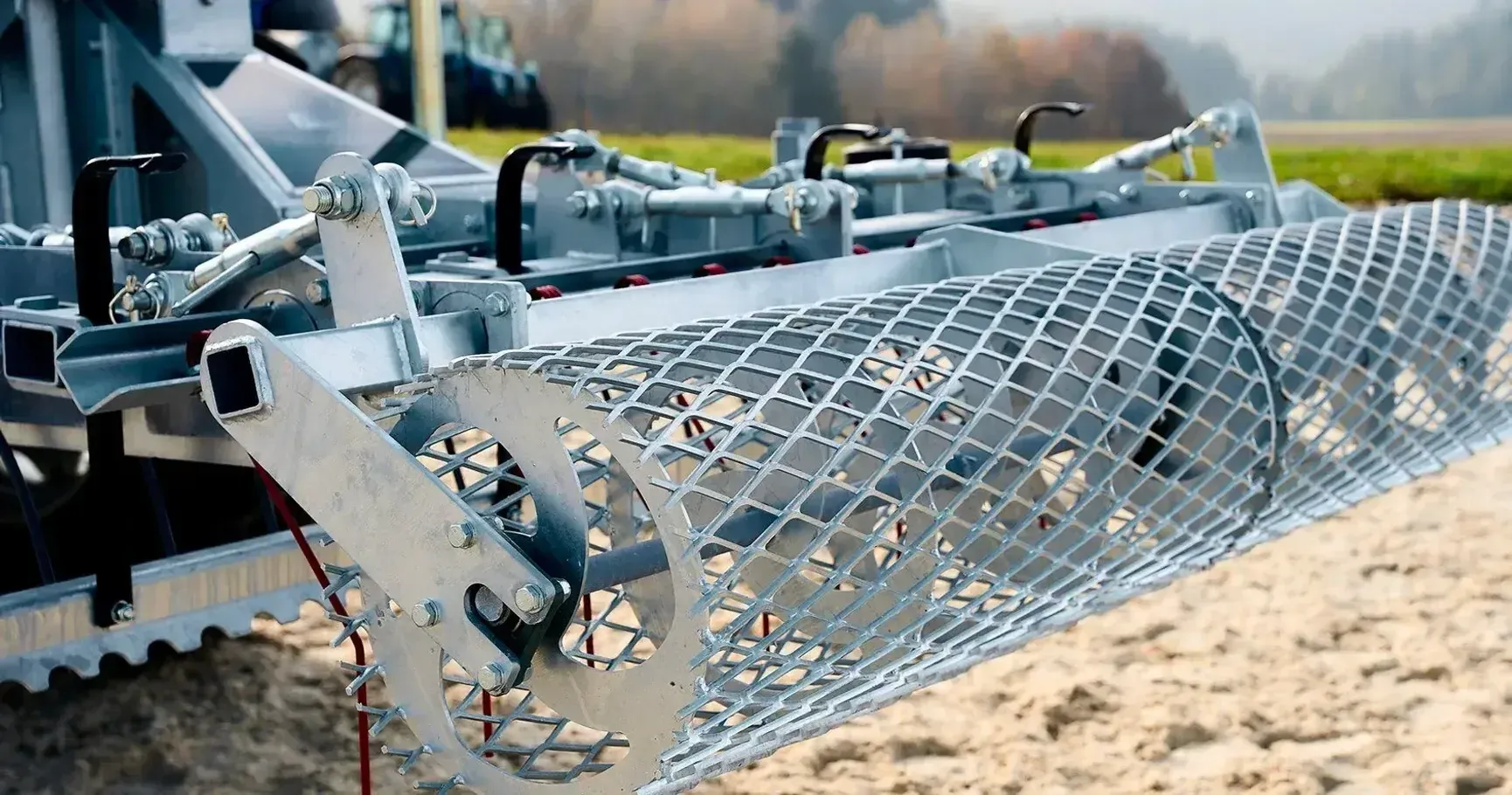
Hülsmann Blechtechnologie serves customers across several industries from Bissendorf, near Osnabrück in Germany. Its services include laser cutting, press braking, and manual and robotic welding, with orders ranging from one-off components to series of 1,000 or 2,000 parts.
Programming one-off parts
Managing Director Ingo Hülsmann describes setup time as a particular challenge on one-off jobs. Before ArcNC, the team programmed directly at the robot, teaching each point manually with the part clamped in its fixture.
A complex part at the demo
Hülsmann's welding equipment supplier introduced the company to ArcNC. The team brought one of their complex parts, its fixture and CAD file to a demo, where the part was programmed in ArcNC and welded by the robot. According to Ingo, programming was much quicker than with the previous approach, which convinced Hülsmann to choose ArcNC.
"For me, the biggest advantage of ArcNC is faster programming, which has significantly reduced our setup time."
Ingo Hülsmann, Managing Director of Hülsmann Blechtechnologie
Automatic programming from CAD files
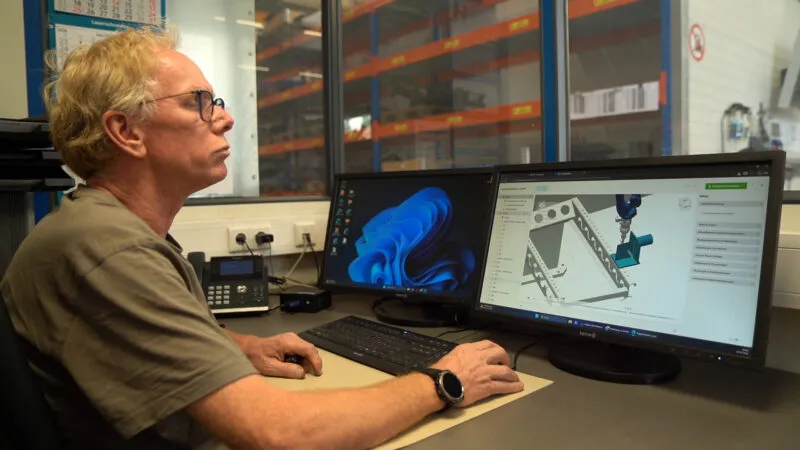
ArcNC now automatically generates Hülsmann's robot programs from CAD files, with potential weld seams detected during upload. Ulrich adjusts those seams directly in the software. The same part model can also be used to calculate weld seam lengths for quotations.
"Where I used to spend a day and a half programming manually, I now need 45 minutes."
Ulrich Schulz, Welding Specialist, Hülsmann Blechtechnologie
Frequently asked questions
How are welding robots programmed?
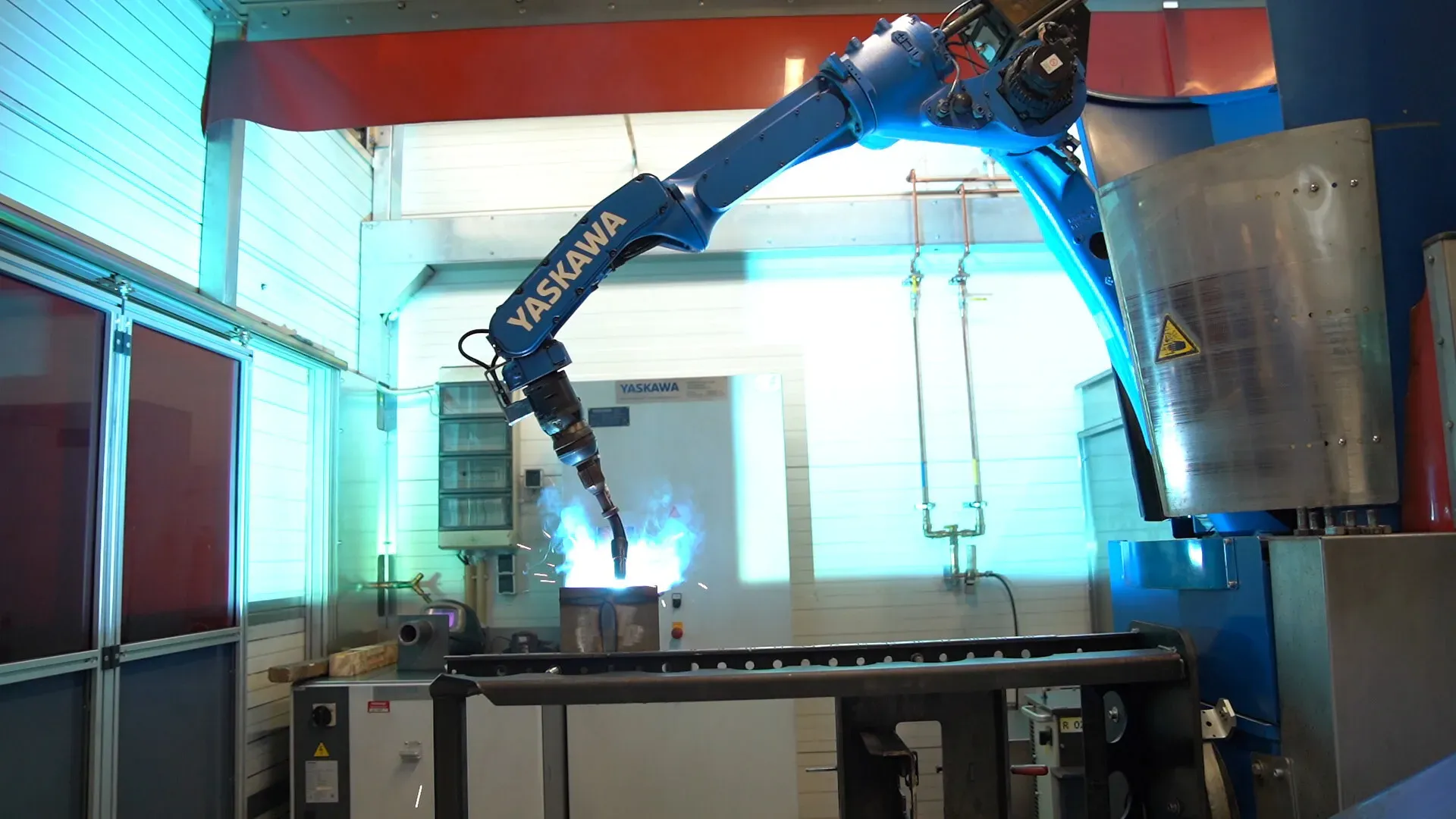
With teach-pendant programming, the operator moves the robot to the required positions, records the weld paths and sets the welding parameters. Hand guiding, available on some cobots, lets the operator move the arm physically to teach positions. Both use the real robot during teaching.
Offline programming uses a digital model of the robot cell to create and simulate the program on a computer. The amount of manual programming depends on the software. Automated welding robot programming with ArcNC also takes place away from the robot, but the software detects potential weld seams from the CAD file and automatically generates the weld sequence and robot motions. The robot can continue producing parts while the next program is prepared.
How long does it take to program a welding robot?
The number of welds, access around the part and the movements required between welds all affect programming time. With teach-pendant programming, these positions and movements are taught at the robot. Offline programming moves preparation to a computer, where the programmer may still need to define paths and motions. ArcNC automatically detects potential weld seams and generates the weld sequence and robot motions from CAD.
At Hülsmann, welding specialist Ulrich Schulz reports a reduction from a day and a half of manual robot programming to 45 minutes with ArcNC.
How do you program a welding robot from a CAD file?
With offline programming (OLP), you import the part and fixture CAD files into a digital model of the robot cell and position them to match the physical setup. The programmer defines the weld paths, torch angles and welding parameters, sets the weld sequence and programs the movements between welds.
The program is then simulated to check reachability and collisions, adjusted where needed, and exported for the robot controller. The amount of manual work depends on the OLP software's automation features.
ArcNC automatically detects potential weld seams from CAD and generates the weld sequence and robot motions.
Can you change an automatically generated welding robot program?
Yes. ArcNC lets you add or remove welds, shorten or extend seams, change welding parameters and set the weld sequence. Common welding settings can be saved and reused through process presets, while individual welds or sections can have their own parameters. You can also adjust robot motions when a job needs a particular torch approach or robot position.
Can welding robots be used for small batches and one-off parts?
Yes. The challenge is preparing a new robot program for a small amount of welding. If teaching the robot takes several hours, a short batch may be quicker to weld by hand. Repeat orders are different because the robot program can be used again.
With ArcNC, the software detects potential weld seams from CAD and automatically generates the weld sequence and robot motions. This reduces the programming work needed for each new part and can make robotic welding worthwhile for smaller batches and one-off jobs.